
Introduction
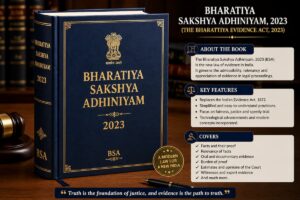
The term “estoppel” is derived from the French word “estope” which simply means “to stop”. It is defined in chapter 8 of BSA under section 121-123. Estoppel is a legal rule that stops a person from changing their statement or going back on their promise if someone else has believed it and acted on it. In simple words, a person cannot say something today and later say the opposite if it harms another person. The purpose of estoppel is to protect people from unfairness caused by someone changing their words or actions.
Estoppel is grounded in the principles of:
- Equity
- Justice
- Good Conscience
The Term Estoppel is established in the case Pickard vs. Sears (1837). And it received further judicial recognition in Sarat Chunder Dey vs. Gopal Chunder Laha (1891).
Definition of Estoppel under Section 121 of BSA
When a person has by his declaration, act or omission, intentionally caused or permitted another person to believe a thing to be true and to act upon such belief neither he, nor his representative shall be allowed to deny the truth of that thing in a suit or between them in a proceeding. In simple words, if you make someone believe something and they act on it, you cannot later say it was not true.
Illustration: A intentionally and falsely leads B to believe that a certain piece of land belongs to A, includes B to purchase and pay for it, if A subsequently becomes the owner of the land and attempts to annual the sale on the grounds of lacking title at the time of sale, A cannot be allowed prove the lack of tittle.
In easy language:- A purposely and wrongly makes B believe that the land belongs to A. Because of this belief, B buys the land and pays money for it. Later, A becomes the real owner of that land and then tries to cancel the sale by saying that at the time of selling, he was not the owner. In this situation, A is not allowed to say that he had no ownership at the time of sale. He cannot go back on his earlier statement.
Case:- Nilofar vs. State of Madhya Pradesh, 1991:- In this case, when applying for a medical college a merit list was published for a house-job. Later, the same list was used for M.D. course admissions. The plaintiff sued, but the court ruled against him because he had accepted the first merit list.
Kinds of Estoppel:-
- Estoppel by Matters of Record/Quassi Record:- This type of estoppel happens when a court gives a final decision in a case. It is similar to the rule of Res Judicata. Once a court gives its judgment, all the parties involved in the case, including their legal heirs or representatives, must follow that decision. They cannot file another case on the same issue, and they cannot question the facts that the court has already decided.
- Relevant Section:- Section 10-14 of CPC and Section 34 of BSA.
- Exceptions: Even though estoppel by record is usually final, the judgment can still be challenged. A person can file an appeal or ask for revision of the decision. The judgment can also be cancelled if the court did not have proper authority (jurisdiction) to decide the case, or if the decision was obtained by fraud (cheating) or secret agreement between parties (collusion), as given under Section 38 of BSA.
- In simple words, a court decision is final, but it can be changed if there was no proper authority or if it was obtained dishonestly.
- Estoppel by Deed:- This Estoppel arises from agreements made through a deed. It prevents parties to the deed & their representative from denying the facts agreed upon in the deed.
- Relevant Section:- Section 43 of the Transfer of Property Act.
- Exceptions:- Estoppel by deed does not apply if the deed is affected by fraud or illegality.
- Estoppel By Conduct (Estoppel In Pais):- “Estoppel in the country” or estoppel before the public”. It has been discussed in Section 121 to 123.. This type of estoppel happens when a person, by agreement, false statement, or carelessness, makes another person believe something to be true and act on that belief. Later, the first person cannot deny those facts. In simple words, if you make someone believe something and they act on it, you cannot later say it was not true.
- Example:- When a person changes his religion upon marriage, he is bound by the new religion due to the principle of estoppel.
- Case:-Shri Krishna vs. Kurukshetra University:- Despite failing subjects, Shri Krishna was promoted to Part II. The university later denied him his roll number, accusing him of fraud for nor meeting attendance requirement. The court found no fraud, nothing that the university could have varified attendance with due diligence. This case illustrates how estoppel by conduct prevents the university from contradicting its earlier promotion through inconsistent behavior.
- Equitable Estoppel:- Applies when estoppel is not provided by statute. Example:- Sections 41& 43 of the transfer of property act.
- Estoppel by Silence or Acquiescence:- When a person has a duty to inform others of accurate facts and fails to do so, estoppel can be applied, and it will amount to fraud as defined under Section 17 of the Indian contract act. However, if there is no duty to disclose, estoppel does not apply. Example:- An ostensible owner sells a property, and the real owner remains silent. The owner’s silence constitutes estoppel.
- Promissory Estoppel: It binds a party by their promise if the other party has acted based on that promise. The promisor cannot deny the promise’s validity.
- Kedarnath Bhattacharji vs. Gorie Mohammad:- Once a promise to pay for an act is made, it cannot be retracted once performance has begun.
- Doctrine of Promissory Estoppel Does’t Apply to:-
- a contract which does not satisfy the requirement provided under Article 299 of the Indian Constitution.
- Agreement which are in contravention of the law.
- promise made by an executive officer is beyond his power.
- educational/academic matters.
- Promissory Estoppel against Government:- When the government promises something and people act on that promise, the govt. is bound to its promise, but this doctrine does not apply if the promise is beyond the official’s powers.
- Case:- Motilal Padampat Sugar Mills vs. State of U.P (1979):- In this, case, the govt had promised that those who set up industries in Uttar Pradesh would be given a sales tax exemption for an initial period of 3 years, Based on this promise, the plaintiff took out a large loan and established a vegetable plant in UP. Subsequently, the govt. canceled the scheme. The court concluded that the govt was bound by its promise and was liable for the same. The doctrine of promissory estoppel can be revoked.
- Issue Estoppel:- Prevents re-litigation of an issue that has already been decided in a pervious case.
Exceptions of the Rule of Estoppel
- To matters where both parties know the truth
- Against statutes or statutory provisions
- to regulations, ultra vires orders & decisions.
- To questions of law.
Doctrine of Estoppel does not apply:-
- To sovereign acts of the Govt.
- Against the minor
- In cases related to maintenance, as such rights are substantial&variable.
Section 122 BSA Estoppel of tenant and licensee person in possession:
- A tenant (a person who rents property) cannot deny that the landlord was the owner of the property at the time when the tenancy started.
- A licensee (a person who is allowed to use property with permission, like using someone’s house/shop with consent) cannot deny that the person who gave permission had the right to do so.
This Rule Exists Because:-
This rule is based on the principle of fairness. If you accepted someone as landlord or owner in the beginning, you cannot later change your statement just to avoid your responsibility. It prevents dishonesty and protects property rights
Important Points:-
- The tenant cannot deny the landlord’s title at the beginning of tenancy.
- This rule applies during the continuation of tenancy.
- After tenancy ends, the situation may change depending on facts.
- The same principle applies to licensees.
Example:- A rents a shop from B. After some time, A refuses to pay rent and says, “B was not the real owner.” Under Section 122, A is not allowed to deny B’s ownership at the time when the rent agreement started.
Section 123 BSA Estoppel of acceptor of bill of exchange, bailee or licensee:
- When a person accepts a bill of exchange (a written order to pay money), he cannot later say that the person who made (drew) that bill did not have the right to do so.
- Similarly, if a person receives goods as a bailee (someone taking goods from another for some purpose), he cannot later deny that the person who gave the goods (the bailor) had the right to do so.
- And if someone receives a license (permission) from another person to use something, he cannot later deny that the one who gave that license had the authority to give it. Note:- Section 123 addresses estoppel related to movable property on agreement and is supported by Section 41 & 42 of the Negotiable Instruments Act.
Explanation 1:
However,, the acceptor may dispute whether the bill was drawn by the person it claims to be from. Bailee: A bailee cannot deny that the bailor had the authority to make the bailment when it began
Example:- A garage owner who accepts a car for repair cannot challenge the title of the person who gave them the car.
Explanation 2:
If a bailee gives the goods to someone else (not the original owner), he can show that the other person had a right to those goods.
Conclusion:-
Under the Bharatiya Sakshya Adhiniyam, 2023, the principle of estoppel ensures fairness and honesty in legal dealings. It prevents a person from denying a statement, fact, or position that they earlier accepted, especially when another person has relied on it and acted upon it.
Estoppel protects people from being harmed due to someone changing their words or conduct later. Once a person makes another believe something and the other person acts on that belief, the first person cannot go back and deny it in court.