INTRODUCTION
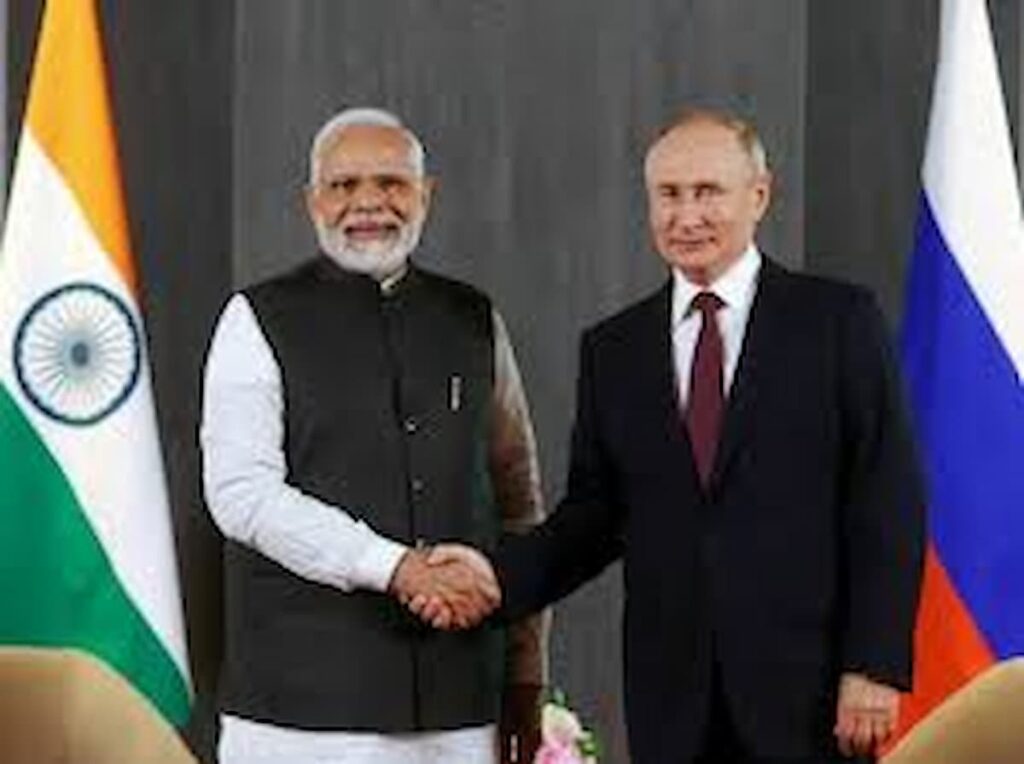
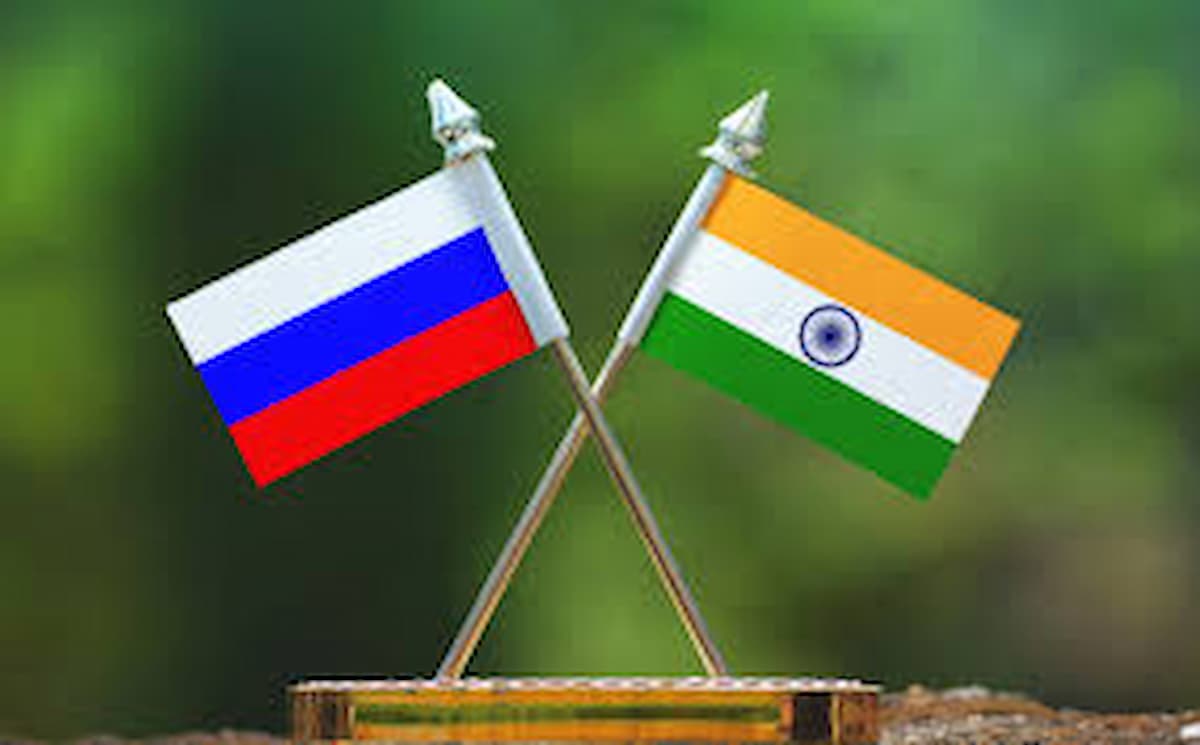
India and Russia shares one of the strongest, long-standing and time tested strategic partnership in the world. Their relationship is based on mutual trust, defence cooperation and geopolitical support. This bond developed during the cold war era when the soviet union supported India on key issues, and it continues today through collaboration in defence, energy and international forums, making it a stable and significant global partnership.
HISTORICAL BACKGROUND
SOVIET ERA (1950s – 1991)
- During the Soviet Era (1950s – 1991), India and USSR developed a strong and reliable partnership.
- The USSR supported India on crucial issues such as Kashmir and the Goa Liberation.
- A major milestone was the signing of the Indo-Soviet Treaty of Peace, Friendship and cooperation in 1917, which proved especially significant during the Bangladesh Liberation War.
- This period also saw the Soviet Union emerge as the major supplier of defence equipment to India, strengthening India’s military capabilities.
- These foundation of trust, cooperation and strategic support played a key role in shaping the long-standing and stable relationship that continues India and Russia even after the disintegration of the Soviet Union.
REALTION AFTER 1991
STRATEGIC PARTNERSHIP
- In 2002 both the countries ( India and Russia ) signed the “Declaration on Strategic Partnership”, making a new phase of cooperation based on mutual trust and shared interests, making Russia one of India’s closest partner.
- Over time, this relationship was further upgraded to a “Special and Privileged Strategic Partnership” in 2010 highlighting its importance.
- Regular high-level meetings and agreements were being held strengthening their bond, and ensuring that India and Russia remain close partners in the changing global order.
KEY AREAS OF COOPERATION
DEFENCE AND MILITARY
This is the Strongest Pillar of India and Russia ties that the majority of India’s Military Hardware ( estimated about 40% to 60% ) is imported from Russia.
JOINT MILITARY PROJECT:-
- BrahMos Missile or Aerospace ( World’s Fastest Supersonic Cruise Missile ).
- INS Vikramaditya Aircraft ( 44,500-tonne modified Kiev-class aircraft ) brought from Russia.
- Indo-Russian Rifles Private Limited (IRRPL) Manufacturing over 600,000 AK-203 assault rifles in Amethi, India.
- Tanks such as T-90 and T-72 .
- Strategic Deliveries: Despite global sanctions, Russia has continued delivering critical systems like the S-400 Triumf air defense missile system and Project 11356 stealth frigates (two delivered between late 2024 and mid-2025).
- RELOS Pact: In February 2025, the two nations signed the Reciprocal Exchange of Logistics (RELOS) agreement. This simplifies logistics for joint exercises and allows warships and aircraft to access each other’s facilities for refueling and maintenance.
NUCLEAR ENERGY
- Russia helped India to build the Kundankulam Nuclear Power Plant ( KKNPP ) in Tamil Nadu. It is the country’s largest nuclear power station, with a planned 6,000 MW capacity from six Russian-designed VVER-1000 reactors.
- Collaborated with India under Civil Nuclear Co-operation Agreements.
- Small Modular Reactors (SMRs) Under the Nuclear Energy Mission
announced in the 2025-26 Union Budget, India and Russia’s Rosatom are discussing the deployment of SMRs. A notable MoU was signed between MAHAGENCO and Rosatom to explore thorium-powered SMRs.
SPACE COOPERATION
- The space cooperation between India and Russia is one of the oldest and most trusted dimensions of their relationship
- Russia trained India’s First Astronaut Rakesh Sharma in 1984, the first Indian citizen to travel into space aboard the Soviet spacecraft Soyuz T-11. He spent nearly eight days at the Salyut 7 orbital station.
- Russia supported India in Gaganyaan Mission.( Gaganyaan is the Indian Space Research Organisation’s ( ISRO ) maiden human spaceflight program, aiming to launch a 3- member crew to a 400 km Low Earth Orbit ( LEO ) for a three-day mission, with a safe splashdown in Indian sea waters.)
- Early Satellite Launches Russia provided the launch vehicles for India’s first satellites, Aryabhata (1975) and Bhaskara (1979), from Soviet cosmodromes.
TRADE AND ECONOMY
- Areas of Trade ; Oil, Gas, Diamonds, Fertilizers, Machinery and Defence Equipment.
- In 2002 onwards Trade increased due to Cheap Russian Crude Oil imports by India. ( Crude Oil: India has become one of the largest buyers of Russian crude oil. By 2025-2026, Russia remained a top supplier, often providing oil at discounted rates compared to global benchmarks. )
- Coal and Fertilizers: Beyond oil, India has significantly increased imports of Russian coking coal for its steel industry and fertilizers to support its massive agricultural sector.
POLITICAL SUPPORT
- Russia supports India demand for a Permanent Seat in the UN Security Council.
- Kashmir Issue: Russia has historically used its Veto Power in the UN Security Council (UNSC) to support India’s position on Kashmir, maintaining that it is a bilateral matter between India and Pakistan.
- Multilateral Forums: Both nations collaborate closely through high-profile groups like BRICS (Brazil, Russia, India, China, South Africa) and the Shanghai Cooperation Organisation (SCO) to advocate for the interests of the “Global South.”
RECENT CHALLENGES IN THE RELATIONSHIP
- INDIA AND US : India’s growing partnership with the US through QUAD ( The Quadrilateral Security Dialogue is an informal strategic forum comprising the United States, India, Japan, and Australia,.) is seen by Russia.
- RUSSIA AND CHINA PARTNERSHIP : Russia increasing closeness with China sometimes concerns India.
INDIA UKRAINE WAR 2022 : India maintains a mutual relations focusing on Dialogue and Diplomacy. India balances its relations with both Russia and Western Countries.
Current Status
In 2026, the relationship is evolving to address modern challenges. While India maintains strategic autonomy by growing closer to the US and the QUAD, it refuses to isolate Moscow, focusing instead on dialogue and diplomacy to balance its global interests.
CONCLUSION
Thus, India and Russia shares a longstanding and trust worthy partnership routed in History, Defence, Nuclear Energy, and Mutual Geopolitical Support. Their partnership remains enduring, though its future strength depends on diversifying economic ties and managing the complexities of changing global alignments.